You’ve probably heard the term dirty dozen foods while shopping for fruits and vegetables. It often comes up in conversations about organic produce and pesticide residues, leaving many people wondering whether they should change the way they shop.
The good news is that understanding the Dirty Dozen doesn’t have to be confusing. The list is meant to help consumers make informed choices, not discourage them from eating fruits and vegetables. With a few simple strategies, you can continue enjoying a nutritious diet while reducing your exposure to pesticide residues.
What Are the Dirty Dozen Foods?
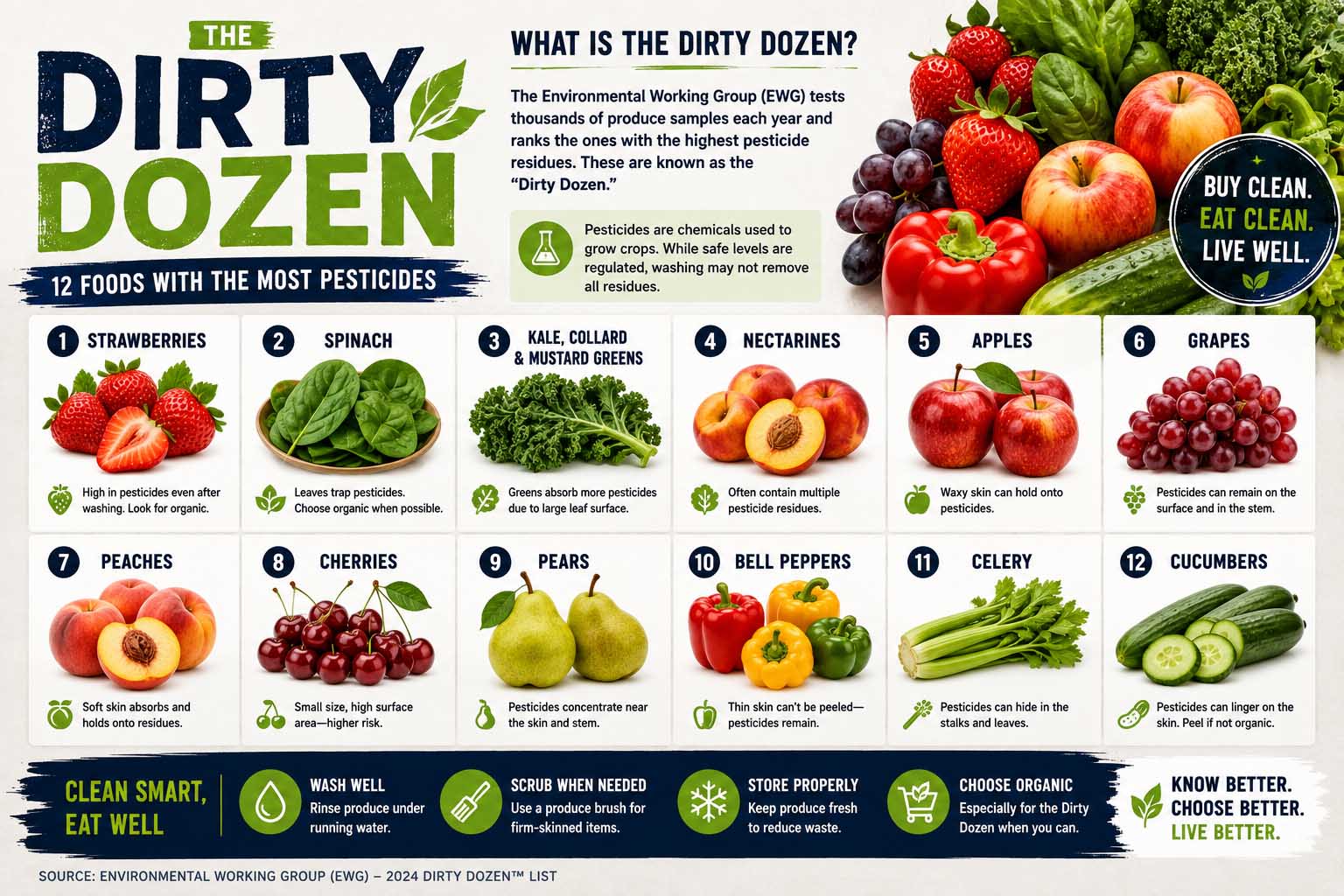
If you’re asking what are the dirty dozen foods, the term refers to a yearly list of fruits and vegetables that tend to have higher levels of pesticide residues after routine washing, based on testing by government agencies. The list is published annually by the Environmental Working Group (EWG), which analyzes publicly available data from produce testing programs.
The Dirty Dozen list doesn’t mean these foods are unsafe to eat. Instead, it highlights produce that may benefit from extra attention when shopping, washing, or choosing organic options if they fit your budget.
Health experts continue to encourage eating plenty of fruits and vegetables because the overall health benefits are well established.
Dirty Dozen Foods 2026
While rankings can change slightly from year to year as new testing data becomes available, the dirty dozen foods 2026 list is expected to focus on produce that has consistently ranked among the highest for pesticide residues.
Common items often found on the list include:
| Produce | Why It Often Appears |
|---|---|
| Strawberries | Thin skin and frequent pesticide use |
| Spinach | Large leaf surface can retain residues |
| Kale, collard & mustard greens | Leafy vegetables with measurable residues |
| Grapes | Multiple pesticide applications during growth |
| Peaches | Delicate skin and insect pressure |
| Pears | Frequently treated during production |
| Nectarines | Thin skin increases residue potential |
| Apples | Often sprayed to protect against pests |
| Bell and hot peppers | Can contain residues from several pesticides |
| Cherries | Susceptible to insects and fungal diseases |
| Blueberries | May receive multiple treatments |
| Green beans | Recently added due to updated testing results |
The exact order may vary each year, so checking the latest report can help if you prefer to prioritize organic purchases.
Why Does the Dirty Dozen List Exist?
The Dirty Dozen was created to help consumers understand where pesticide residues are most commonly detected.
Its goals include:
- Raising awareness about pesticide exposure.
- Helping shoppers prioritize organic purchases if desired.
- Encouraging continued improvements in farming practices.
- Supporting informed food choices.
At the same time, organizations such as the U.S. Department of Agriculture (USDA) and the Food and Drug Administration (FDA) state that the vast majority of produce sold in grocery stores meets established safety standards.
That means both conventional and organic fruits and vegetables can be part of a healthy diet.
Should You Stop Eating Dirty Dozen Foods?
Absolutely not.
Nutrition experts consistently agree that eating fruits and vegetables is far healthier than avoiding them because of concerns about pesticide residues.
For example, strawberries, spinach, and apples provide valuable nutrients such as:
- Fiber
- Vitamins
- Minerals
- Antioxidants
- Plant compounds that support overall health
If you’re trying to increase your daily produce intake, choosing more foods high in fiber is one of the simplest ways to support digestive health while also improving the overall quality of your diet.
The nutritional benefits of eating produce generally outweigh the potential risks associated with the low pesticide levels found on properly handled foods.
Why Some Produce Has More Pesticide Residues
Not every fruit or vegetable is equally vulnerable to insects, fungi, or plant diseases.
Several factors influence pesticide use.
Thin or Delicate Skin
Fruits such as strawberries, peaches, and nectarines have delicate skins that offer less natural protection.
Farmers may need to protect these crops from insects and weather-related damage throughout the growing season.
Leafy Surfaces
Leafy vegetables like spinach and kale have broad surfaces that can collect residues more easily than produce with thicker protective skins.
Proper washing helps remove dirt and some pesticide residues, although it doesn’t eliminate every trace.
Growing Conditions
Climate also plays a role.
Humid environments may increase fungal diseases, while certain regions experience greater insect pressure, leading to different pest management strategies.
Benefits of Eating Produce Remain Clear
It’s easy to become concerned after reading about pesticide residues.
Still, decades of nutrition research continue to show that diets rich in fruits and vegetables are associated with better overall health.
Many colorful fruits and vegetables provide:
- Vitamin C
- Folate
- Potassium
- Fiber
- Antioxidants
For example, vegetables such as asparagus offer valuable vitamins, minerals, and fiber. Learning more about the health benefits of asparagus can inspire you to include an even wider variety of produce in your weekly meals.
Rather than reducing fruit and vegetable intake, experts generally recommend focusing on variety and proper food handling.
Organic vs. Conventional Produce
One of the biggest questions shoppers ask is whether organic produce is necessary.
Organic farming limits the types of pesticides that farmers can use, but organic crops may still be treated with approved substances when needed.
Choosing organic may reduce exposure to certain pesticide residues, yet conventional produce remains nutritious and is regulated under food safety standards.
If your grocery budget is limited, consider buying organic versions of the produce you eat most often while purchasing conventional options for the rest.
This balanced approach allows many families to enjoy more fruits and vegetables without significantly increasing food costs.
Who Might Choose Organic More Often?
Everyone has different priorities.
Some people prefer organic produce because they want to reduce pesticide exposure whenever possible.
Others may choose organic if they are:
- Pregnant
- Feeding young children
- Eating large amounts of certain fruits and vegetables
- Following specific personal preferences
There is no single “right” approach. The most sustainable eating plan is usually the one you can maintain over time while continuing to eat plenty of plant foods.
Everyday Habits That Reduce Pesticide Exposure
Whether you buy organic or conventional produce, simple kitchen habits can help.
Try to:
- Rinse produce under running water.
- Remove damaged outer leaves from leafy vegetables.
- Peel certain fruits when appropriate.
- Dry produce with a clean towel.
- Store fruits and vegetables properly to keep them fresh.
Many people also enjoy making fresh juices from fruits and vegetables. If that’s part of your routine, understanding the benefits of juicing can help you build balanced recipes while remembering that thoroughly washing produce first is still an essential step.
How to Clean Dirty Dozen Foods
Many people search for how to clean dirty dozen foods because they want to reduce pesticide residues before eating fresh produce.
While no washing method removes every residue, proper cleaning can significantly reduce dirt, bacteria, and some pesticides.
Follow these simple steps:
- Wash your hands before handling produce.
- Rinse fruits and vegetables under cool running water.
- Gently rub firm produce like apples, pears, and peppers with your hands.
- Use a clean vegetable brush for produce with thicker skins, such as potatoes or cucumbers.
- Remove the outer leaves from leafy greens like lettuce or cabbage.
- Dry produce with a clean paper towel or cloth before storing or eating.
Avoid using soap, bleach, or household cleaners. These products are not intended for food and may leave residues of their own.
Dirty Dozen vs. the Clean Fifteen
The Dirty Dozen often gets the most attention, but it’s only half of the picture.
The Environmental Working Group also publishes the “Clean Fifteen,” a list of fruits and vegetables that generally have lower pesticide residues.
Examples frequently found on that list include:
- Avocados
- Sweet corn
- Pineapple
- Onions
- Papaya
- Cabbage
- Mushrooms
If buying organic isn’t practical for your budget, many shoppers choose organic versions of Dirty Dozen produce while purchasing conventional options from the Clean Fifteen.
This approach can help stretch your grocery budget without reducing fruit and vegetable intake.
Should You Buy Organic?
There isn’t a one-size-fits-all answer.
Buying organic may reduce exposure to certain pesticide residues, but conventional fruits and vegetables remain nutritious and are considered safe when they meet regulatory standards.
Consider organic if you:
- Eat large amounts of specific Dirty Dozen produce.
- Prefer organic farming practices.
- Have room in your grocery budget.
- Want to reduce pesticide exposure when possible.
If organic produce isn’t available or affordable, don’t let that stop you from eating more fruits and vegetables.
A diet rich in produce is still one of the healthiest eating patterns you can follow.
Practical Shopping Tips
Shopping for healthy foods doesn’t need to be complicated.
Here are a few simple habits that can help:
- Buy seasonal produce when possible.
- Choose fresh fruits and vegetables without bruises or mold.
- Wash produce before eating or preparing meals.
- Freeze extra produce to reduce food waste.
- Mix frozen and fresh fruits and vegetables throughout the week.
Planning meals before grocery shopping also helps you buy only what you’ll use.
Common Myths About the Dirty Dozen
Myth: Dirty Dozen Foods Are Dangerous
No.
The Dirty Dozen identifies produce with relatively higher pesticide residues compared with other fruits and vegetables. It does not mean those foods are unsafe to eat.
Government agencies continue to monitor food safety, and produce sold in grocery stores must meet established regulations.
Myth: Washing Produce Doesn’t Help
Not true.
Although washing doesn’t remove every pesticide residue, rinsing produce under running water removes dirt, bacteria, and part of the surface residues.
It’s a simple habit worth keeping.
Myth: Organic Produce Contains No Pesticides
Organic farming also uses approved pesticides when necessary.
The difference lies mainly in the types of products farmers may use and how they’re regulated.
Myth: You Should Avoid Dirty Dozen Foods
Avoiding fruits and vegetables altogether would likely have a much greater impact on your health than eating conventionally grown produce.
The goal is to eat a wide variety of plant foods while using practical food safety habits.
Building a Balanced Diet
The Dirty Dozen is only one small part of healthy eating.
A balanced diet should include:
- Fruits
- Vegetables
- Whole grains
- Lean proteins
- Healthy fats
- Dairy or fortified alternatives
Choosing a variety of colorful foods helps provide vitamins, minerals, antioxidants, and fiber.
People with certain kidney conditions may need individualized nutrition advice. For example, some healthcare providers recommend low phosphorus foods or other dietary adjustments based on a person’s medical needs rather than general healthy eating advice.
Who Should Talk With a Healthcare Professional?
Most people can simply follow healthy food handling practices and continue eating a variety of produce.
However, speak with a healthcare professional or registered dietitian if you:
- Have a weakened immune system.
- Are pregnant and have food safety concerns.
- Have chronic kidney disease or another condition requiring a specialized diet.
- Need personalized nutrition guidance.
Nutrition advice should always be tailored to your overall health, not just one list of foods.
Frequently Asked Questions
What are the Dirty Dozen foods?
The Dirty Dozen refers to a yearly list of fruits and vegetables that tend to have higher pesticide residues after routine washing, based on government testing data analyzed by the Environmental Working Group.
Are Dirty Dozen foods safe to eat?
Yes. Health authorities continue to recommend eating plenty of fruits and vegetables because their nutritional benefits greatly outweigh potential risks from pesticide residues found within regulatory limits.
Should I always buy organic?
Not necessarily.
Buying organic is a personal choice. If it fits your budget, you may choose organic versions of produce you eat most often. Otherwise, washing conventional produce thoroughly remains a good practice.
How can I reduce pesticide exposure?
Wash produce under running water, peel certain fruits when appropriate, remove outer leaves from leafy vegetables, and eat a varied diet.
Are frozen fruits and vegetables included?
Frozen produce is generally processed before packaging and can still be an excellent choice for a healthy diet. Follow package directions for preparation if needed.
Does cooking remove pesticides?
Cooking may reduce some pesticide residues, depending on the food and cooking method.
Smart Choices Matter More Than Perfect Choices
Understanding dirty dozen foods can help you make informed shopping decisions without creating unnecessary worry. Whether you buy organic, conventional, or a combination of both, the healthiest habit is to keep eating a wide variety of fruits and vegetables every day.
Wash produce thoroughly, store it properly, and focus on building balanced meals rather than avoiding nutritious foods. Small, consistent habits often have the biggest impact on long-term health.